This is an open access article distributed under the terms of the Creative Commons Attribution–NonCommercial 4.0 International License (CC BY-NC 4.0), which permits non-commercial use, distribution and reproduction in any medium, provided the original work is properly cited.
Abstract
The main goal of this study is to develop a strategic model for the sustainable tourism development at the community level. The framework was developed by synthesizing the sustainable tourism literature, incorporating strategic management, community-based tourism, and Sustainable Development Goals perspectives, alongside internationally recognized indicator approaches. It includes three main pillars: the socio-economic interests of community residents, the experiences and satisfaction of tourists, and environmental protection. Each pillar is operationalized through three indicators scored on a 0–4 scale. These pillar scores are then combined into a composite Sustainable Tourism index with an interpretation scale. Some indicators within the set are intended to be assessed by experts using the Delphi method. The indicator set can be adapted to a community’s tourism potential as well as its economic, social and environmental conditions.
The model rests on the premise that tourism development should not be limited to short-term objectives or serve only the interests of a particular sector. Instead, it should create a sustainable, long-term impact on the socio-economic structure of the community while avoiding harm to natural resources and the environment. Because the framework has not yet been tested empirically, future research should apply it to specific communities using empirical data to calibrate the indicators and scoring thresholds to local conditions.
Introduction
Tourism is one of the most dynamically developing directions of the world economy, characterized by ensuring stability. At the same time, tourism, having a multifaceted significance, its development exerts significant pressure on natural, social, and cultural systems. This implies that irregular and independent tourism brings systemic risks, which become more pronounced in the context of environmental hazards, growing social inequality, and cultural assimilation.
However, from the perspective of the community's strategic development, several key issues related to ensuring stability remain fragmented and focus on short-term solutions. Existing studies, as a rule, consider the sustainable development of tourism from the perspective of strategic management, tourism marketing, or social approaches. With these approaches, the existing problems are measured in isolation, without a comprehensive approach, which leads to the low effectiveness of an integrated strategy. At the same time, existing models of sustainable tourism development focus on certain directions at the macro level, ignoring the community. At the community level, the development of tourism brings structural constraints that have a huge impact on the livelihoods of the population.Narrow and short-term management approaches limit the development potential of the community. The challenges of tourism development in the community, particularly congestion, environmental preservation, cultural gaps, and social inequalities, emphasize the need for scientifically based strategic models for tourism development.In order to realize the potential for sustainable development, the community must apply strategic models to evaluate and manage all tourism resources and their impacts on the economic state of the community and the surrounding environment.
Considering the above, the aim of the article is to develop a universal model for ensuring sustainable tourism development in the community.
Literature Review
The development of sustainable tourism is an important issue for the global economy, with numerous scientific and practical studies in various directions and manifestations. The challenges arising from the rapid growth of tourism are becoming more evident in today's dynamic developing society, and in particular at the community level. The importance of sustainable tourism is noted by Richard W. Butler, who emphasizes the need for a long-term approach in the management of tourism impacts (Butler, 1999). Tourism leads to overloading of destination resources and social conflicts, which, as a rule, distorts the competitiveness of destinations in the long term (Nunkoo & Smith, 2013). In this context, sustainability is not seen as an additional goal but as a strategic necessity.
In the sustainable development of tourism, integrated approaches to strategic good governance are becoming increasingly important, including in particular the involvement of local communities and long-term strategic planning (Sharpley, 2020). Strategic tourism development can bring various dividends to society, in particular: increased employment, the development of small and medium-sized businesses, the reduction of territorial disparities, and the reduction of social burdens (Croes & Rivera, 2017; Pulido-Fernández, 2019). However, a number of authors emphasize the importance of a strategic approach, without which the idea of sustainable development simply remains at the declarative level (Dodds & Butler, 2019). The application of sustainability principles in strategy requires a systematic approach; otherwise, sustainable development will not provide long-term effects (Bramwell & Lane, 2011). A strategic approach is particularly important in developing economies in communities rich in tourism resources, where sustainable tourism can become an indicator of socio-economic development (Buhalis, 2020). Sustainable tourism is one of the driving forces for economic recovery and increased competitiveness, especially after COVID-19, when tourist needs have evolved (Palacios-Florencio, 2021)․ Planned and sustainable tourism development can become an important source of competitiveness and added value for the community, integrating different levels of the market (Krittayaruangroj, 2023). At the same time, planned and state-controlled tourism development is important for ensuring the socio-economic interests of residents and protecting natural values ( Lijun, 2024).
The contemporary literature on sustainable tourism emphasizes the implementation of the United Nations Sustainable Development Goals (SDGs). In particular, SDG 8 (decent work and economic growth), SDG 11 (sustainable cities and communities) and SDG 12 (responsible consumption and production) are considered key guidelines for the management of tourism in the community (UN, 2015). Community-Based Tourism is a catalyst for achieving the United Nations Sustainable Development Goals by promoting local economic empowerment, inclusive participation, and sustainable livelihoods within communities (Jackson, 2025) ․ The systemic principles of sustainability directly address environmental, economic and cultural issues and their balance (UNWTO, 2005). The UN Sustainable Development Goals contribute to the transition from growth-based approaches to balanced and constructive strategies (Gössling & Scott, 2018).
It is clear that the sustainable development of tourism in the community requires a strategic approach based on scientific research. At the same time, there is a research gap related to the methodology for implementing a strategic model for sustainable tourism development in a community and measurable results.
Methodology
The research is based on mixed methods: general scientific, comparative, etc. The complex application of methods contributes to the assessment of the impact of tourism development, taking into account the concept of strategic development. A strategic model of sustainable tourism development in communities developed on the basis of a complex analysis of various sources of literature and the processing of collected data from research results. This model is based on the interests of triangle.
Economic interests of the community, ensuring tourism contributes to local prosperity and long-term resilience;
Tourist needs and experiences, enhancing visitor satisfaction while promoting responsible tourism;
Environmental protection, safeguarding natural resources and ecosystems.
The uniqueness of this approach lies in the proposed index for assessing the sustainable tourism of community (ST). The ST allows assessing the complex and individual impacts of the triangle objects according to the indicators. The use of a 0–4-point scale is due to the fact that it is widely used in the formation of combined socio-economic indicators and ensures the comparability of indicators with different measurement units.With the help of this index, it is possible to identify strategic issues in tourism development, as well as to conduct comparative analyses between different communities. At the same time, the member included in the model can be changed/corrected depending on the specifics of the tourism resources of the community, as well as strategic goals.
Results / Model Application
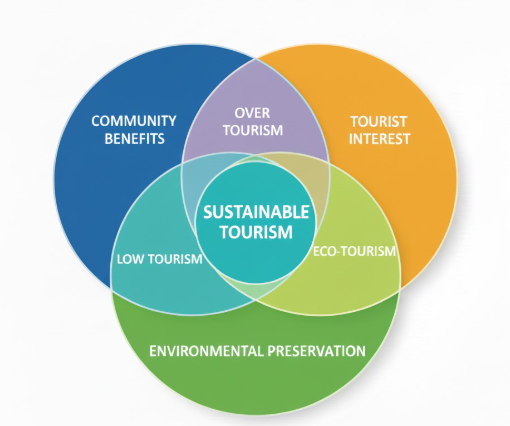
Sustainable tourism development is of fundamental importance for ensuring the strategic interests of resource conservation. In this direction, the introduction of a universal model is important, which will take into account the interests of three main vectors: community, tourist, and environment. The intersection of their interests is the field of sustainable tourism (see Figure 1).
Pillars of Sustainable Tourism
Tourism should be a profitable activity not only for businesses, but also for community residents, who are the primary beneficiaries of tourism revenues. At the same time, when the tourism development strategy emphasizes the interests of the community and tourists (Pillar 1 + 2), then in this case Over-Tourism High interest and community presence, but the environment is sacrificed for growth. When community interests are neglected (Pillar 2 + Pillar 3), the development model gravitates toward eco-tourism. In this case, community interests are neglected, while tourist interests and environmental protection become the primary priorities, which may attract a limited segment of eco-tourists. When tourist interests are ignored and community interests together with environmental protection are prioritized (Pillar 1 + Pillar 3), tourism development remains constrained and does not progress. Sustainable Tourism in strategic perspective is the "Sweet Spot" where all three needs are met simultaneously.
During this study, the economic interests of community residents were assessed using internationally accepted socio-economic indicators, with a 0–4 point scale for each indicator.
a) The share of tourism revenues in the community budget (TR). The share of tourism revenues in the community budget was assessed as follows: up to 5%: 0 points, 5–10%: 1 point, 10–20%: 2 points, 20–30%: 3 points, over 30%: 4 points.
b) Employment rate (EMP) in the tourism sector or sectors dependent on tourism. The indicator was assessed as follows: up to 5%: 0 points, 5–10%: 1 point, 10–20%: 2 points, 20–30%: 3 points, over 30%: 4 points.
c) Gross Domestic Product (GDP) per capita. GDP per capita was assessed accordingly: up to 1500 USD: 0 points, 1500–3000: 1 point, 3000–5000: 2 points, 5000–15000: 3 points, above 15000: 4 points.
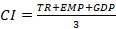
As a result of the combination of the above indicators, it is possible to quantitatively assess the economic benefits of the community from the results of tourism development (see formula 1).
Formula 1
(1)
The Community Economic Interests Index (CI) characterizes the degree of realization of the economic interests of community residents in the context of tourism development. The higher the value of the index, the greater the positive economic impact of tourism on the community.
The assessment of tourists’ interests is based on the level of satisfaction of tourists’ needs. For this purpose, the same methodological approach as in the assessment of community interests is applied, using a 0–4 scoring scale. The level of satisfaction of tourists’ needs is evaluated on the basis of internationally accepted universal indicators through field studies:
a) Satisfaction of tourists’ demand (STD): 0 – not satisfied, 1 – partially satisfied with significant limitations, 2 – satisfied with existing limitations, 3 – satisfied at a high level with minor limitations, 4 – fully satisfied without any limitations.
b) Perception of the value–quality ratio of tourism services (VQP): very poor – 0, poor – 1, normal – 2, good – 3, very good – 4.
c) Willingness to recommend the destination to others (WRQ): will not recommend – 0, neutral – 1, may recommend – 2, will recommend – 3, will definitely recommend – 4.
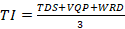
These indicators make it possible to obtain a quantitative assessment of tourist interests (see Formula 2).
Formula 2
(2)
The Tourist Interests Index (TI) can range from 0 to 4․ the closer it is to 4, the higher the level of tourist satisfaction with their visit. At the same time, values of TI approaching 4 may, in some cases, indicate that the high satisfaction of tourist demand occurs under conditions that pose risks to the community’s socio-economic interests or to environmental conservation. This relationship highlights the dual aspects of sustainable tourism—consumer satisfaction and potential impacts on the community and the environment.
The environmental protection component is based on the conservation and efficient use of natural resources. A 0–4 point system was used to assess the level of environmental protection, based on the internationally accepted concept of sustainable development.
a) Efficient use of natural resources (EUNR), which is calculated based on the duration of the possibility of restoring natural resources after their use: 0 – not restored, since the resources are completely destroyed, 1 – partially restored after a long time, 2 – will be restored as a result of certain efforts, 3 – will be restored quickly, 4 – will suffer significant damage and will be subject to ongoing restoration.
b) Environmental pollution reduction and integrated waste management, services (EPWM): very poor – 0, poor – 1, normal – 2, good – 3, very good – 4.
c) Conservation of biodiversity and protection of natural ecosystems (CBPNE): very poor – 0, poor – 1, normal – 2, good – 3, very good – 4.
The indicators of environmental preservation make it possible to obtain a quantitative assessment of main factors (see Formula 3).
Formula 3
(3)
The levels of indicators in Formula 3 are calculating and evaluatin by experts. To ensure maximum impartiality and clear assessments, the Delphi method is used with the assessment of at least 2 experts.
The model includes a system of indicators considered in 3 main directions. Each direction characterizes different criteria for sustainable tourism development, balancing each other. In order to obtain an overall assessment of sustainable tourism in the community, an integrated assessment approach is used (see Formula 4).
Formula 4
(4)
This indicator can range from 0 to 4. A high level of the indicator indicates the stability of the system and the preservation of the community’s interests (see table 1).
Table 1. Interpretation scale for the indicator of the security of strategic interests of sustainable development in the community
Indicator Range
Interpretation
From 0 to 1
Very low level – the strategic interests of the community’s sustainable development are under significant risk and require urgent strategic interventions.
From 1 to 2
Low level – the protection of sustainable development strategic interests is limited, and several risks still constrain the community’s development potential.
From 2 to 3
Medium level – the strategic interests of sustainable development are partially ensured, but improvements in governance and development mechanisms are necessary.
From 3 to 4
High level – the strategic interests of the community’s sustainable development are largely ensured, indicating a stable system and favorable conditions for further development.
This indicator offers a comprehensive overview of sustainable development within a community and facilitates comparative analyses across different communities. To obtain a systematic understanding of tourism’s impact, it is crucial to consider all indicators and monitor their dynamics. This approach allows for timely operational interventions that can enhance the effectiveness of the community’s strategic development.
Conclusion
For modern communities, sustainable tourism development is a strategic issue, as it is directly related to strengthening the local economy, increasing social well-being and preserving natural resources. At the same time, the development of tourism in general is possible only if the needs of tourists are met. In this context, the recommendations proposed in the article can have high practical significance. The proposed strategic model allows balancing the socio-economic interests of the community and environmental priorities, combining them with the interests of tourists. The system of integrated indicators developed in these three main directions includes a 0-4-point assessment scale, which provides an overall and balanced assessment. The integrated indicator allows for comprehensive assessments, comparative analyses and an understanding of the current state and dynamics of sustainable development in the community.
The practical application of the model will be useful for strategic decision-makers at the community level, local governments, and tourism organizations, as it allows for planning and managing tourism processes based on factual data.
Declarations
Funding. This research received no external funding.
Conflicts of interest. The author declares no conflict of interest.
Declaration of generative AI use. AI-assisted tools were used for language editing only; the author reviewed all changes and takes full responsibility for the content
Acknowledgements. The author thanks colleagues at the Armenian State University of Economics for their valuable comments․
How to cite this article
Iskajyan, S. (2026). Advancing Sustainable Tourism for Multidimensional Community Well-Being։ An Integrated Framework. The Gufo Journal of Economics, 2026; 1: GJE-2026-002. https://doi.org/10.70416/gje.2026.002
References
Bramwell, B., & Lane, B. (2011). Critical research on the governance of tourism and sustainability. Journal of Sustainable Tourism, 19(4–5), 411–421. https://doi.org/10.1080/09669582.2011.580586
Cochran, W. G. (1977). Sampling techniques (3rd ed.). Wiley.
Croes, R., & Rivera, M. A. (2017). Tourism's potential to benefit the poor: A social accounting matrix model applied to Ecuador. Tourism Economics, 23(1), 29–48. https://doi.org/10.5367/te.2015.0495
European Commission. (2016). The European Tourism Indicator System: ETIS toolkit for sustainable destination management. Publications Office of the European Union. https://doi.org/10.2873/983087
Garrido Pintado, P., & Recuero Virto, N. (2024). Residents’ perceived benefits as determinants of sustainable tourism development. Tourism Planning & Development. Advance online publication. https://doi.org/10.1080/21568316.2024.2410021
Gössling, S., & Scott, D. (2018). The decarbonisation impasse: Global tourism leaders’ views on climate change mitigation. Journal of Sustainable Tourism, 26(12), 2071–2086. https://doi.org/10.1080/09669582.2018.1529770
Jackson, L. A. (2025). Community-based tourism: A catalyst for achieving the United Nations Sustainable Development Goals One and Eight. Tourism and Hospitality, 6(1), Article 29. https://doi.org/10.3390/tourhosp6010029
Krittayaruangroj, K., Suriyankietkaew, S., & Hallinger, P. (2023). Research on sustainability in community-based tourism: A bibliometric review and future directions. Asia Pacific Journal of Tourism Research, 28(9), 1031–1051. https://doi.org/10.1080/10941665.2023.2276477
Nunkoo, R., & Smith, S. L. J. (2013). Political economy of tourism: Trust in government actors, political support, and their determinants. Tourism Management, 36, 120–132. https://doi.org/10.1016/j.tourman.2012.11.018
Organisation for Economic Co-operation and Development & Joint Research Centre. (2008). Handbook on constructing composite indicators: Methodology and user guide. OECD Publishing. https://doi.org/10.1787/9789264043466-en
Palacios-Florencio, B., Santos-Roldán, L., Berbel-Pineda, J. M., & Castillo-Canalejo, A. M. (2021). Sustainable tourism as a driving force of the tourism industry in a post-COVID-19 scenario. Social Indicators Research, 158(3), 991–1011. https://doi.org/10.1007/s11205-021-02735-2
Pulido-Fernández, J. I., Cárdenas-García, P. J., & Espinosa-Pulido, J. A. (2019). Does environmental sustainability contribute to tourism growth? An analysis at the country level. Journal of Cleaner Production, 213, 309–319. https://doi.org/10.1016/j.jclepro.2018.12.151
Sharpley, R. (2020). Tourism, sustainable development and the theoretical divide: 20 years on. Journal of Sustainable Tourism, 28(11), 1932–1946. https://doi.org/10.1080/09669582.2020.1779732
United Nations. (2015). Transforming our world: The 2030 agenda for sustainable development. https://sdgs.un.org/2030agenda
United Nations Environment Programme & World Tourism Organization. (2005). Making tourism more sustainable: A guide for policy makers. https://wedocs.unep.org/20.500.11822/8741
Wassler, P., Herrero-Crespo, Á., & Rialp-Criado, J. (2026). Understanding overtourism: What do Barcelona residents really think? Tourism Management Perspectives, 63, Article 101495. https://doi.org/10.1016/j.tmp.2026.101495
World Tourism Organization. (2004). Indicators of sustainable development for tourism destinations: A guidebook. World Tourism Organization. https://doi.org/10.18111/9789284407262
Hi! I can explain how to publish or share, find articles in your field, format citations and answer questions about fees and licensing. How can I help?
Answers are based on The Gufo’s published policies. Editorial decisions are made by the editorial team.


 Published with The Gufo